Pages

Monday, July 23, 2012

Humayun Ahmed: When the author and the reader became one

Humayun Ahmed’s body belonged to the writer but the soul belonged to us. The man who for nearly four decades had painted with words the middle-class sensibilities of an entire people has passed away. It was not just grief for the departed but pain of the knowledge that no writer shall probably ever again depict so well what was in essence our own face, our fate, us.
On July 23rd we buried us.

* * *
Few deaths have been mourned this way in our history. A writer however great is limited by the responsibility to create, make sense, convey beauty of the craft — the very nature of his art. But Humayun Ahmed transcended that limit not through art but by writing in the same rhythm of the beating heart of his readers. His gift as a writer is not the point because he had become his readers through his work — the image the people had of themselves. They read him to affirm, confirm and ultimately validate the sprit and notion of a people.

Again, he was us.

* * *
Many years ago, in the mid ‘70s when his fame was just being established, he had in an interview said that his writing was unexpected. He was a brilliant student, better than brilliant a chart toper. His preparation was for the life of an academic. But he had become a writer and it had changed his life. He gave up that world to become a full-time writer and filmmaker and shifted his space.

It was also a transition for a man who was so dearly held in so many lives, a challenge to his own image. The academic who also wrote novels changed and became the new Bangladeshi, a far more dramatic character than the older image of the scribe who is slightly helpless, the harmless kurta-pajama type we are used to imagining. By adopting a new lifestyle, he killed the stereotype of the Bengali author. There were critics of that but as the subsequent events of his life show, he had gone beyond them all.

* * *
What prepared him for this role? He came from an enormously gifted family whose father was killed in 1971. He spent a part of the war days as a Dhaka University student, seeing firsthand the terror of that year. But he emerged with a great sense of the people in distress and joy and related to the extraordinary power of those who survive.

The events of 1971 were key to the understanding of his people and when he began to write, he became the writer who had as if read almost every personal diary that had been written. Art at some point of time became almost irrelevant because he was not doing literature but writing our autobiographies.

* * *
This was not skill but a gift and one cannot argue with that nor perhaps locate it in the literary world. He not only wrote stories that brought to life the nuances of the middle-class — educated, aspiring, agonized, dreaming but often not in control — he knew what the maladies of his class were. His readers knew that it was a mine where the treasures of their own self would be found. His two most noted characters — Misir Ali and Himu — are an amalgam of such insights as they traverse the dark part of the spirit and mind often in conflict with each other. It is no accident that Misir Ali explores the psyche trying to live with the normal, abnormal and the paranormal in the same plane.

It is no accident that Himu is capable of enormous internal conflict and absurd behaviour confounding the very same society and people that had given birth to him. It is by bringing together these elements that are common in our society that the author constructed the new world. In some ways, the author was like the fabled French author George Simenon, whose character Inspector Maigret tries to solve cases but in actuality is holding a mirror up to show who they all were. We shall never know where the characters ended and the author began. And that mystery made him so addictive.

* * *
Humayun Ahmed documented the rising middle-class more successfully than any writer in Bangladesh. He could communicate with his readers in an almost supernatural way. Sarat Chandra Chattopadhyay of an earlier era connected with the readers but not with images of their own world. Humayun Ahmed took the ordinary lives and made them look outstanding. He made the mundane fascinating and in doing so anointed the world of the real with the glory and permanence of fiction. Few writers have tried that, even fewer have been so successful.

* * *
Somewhere in some space the writer, the readers and the characters all met and each took the cloak of the other and became a little bit of each other. We mourn something far more significant than the passing away of a writer; we grieve the death of our collective imagination that was personified by this man. The time for a critical review of his work will be done later. Today it is about the sadness of his death. He and his readers had become one in his fiction. Today we bury that both.
Goodbye.

BY : Afsan Chowdhury.
 

Sunday, July 22, 2012

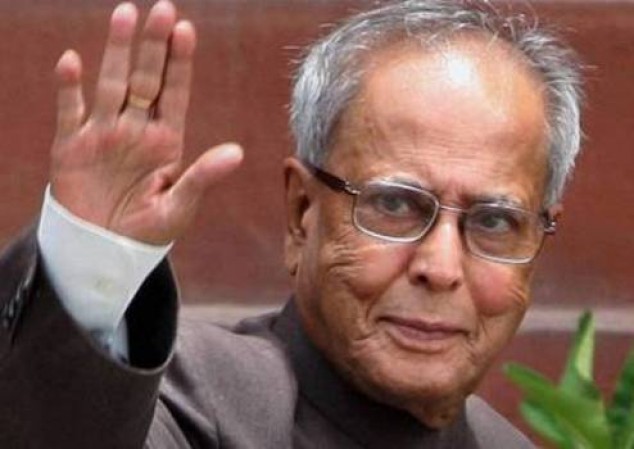
Pranab becomes Indian president

India’s ruling UPA candidate Pranab Mukherjee on Sunday won the Indian presidential elections by a huge margin, defeating his rival PA Sangma, backed by BJP and some other opposition parties.

Mukherjee, 76, will be sworn as the country's 13th president in the central hall of Parliament on July 25.
To be the first Bangalee to occupy the highest constitutional post, Mukherjee will succeed Pratibha Patil, India's first woman head of state.

Out of the total value votes of nearly 11 lakh, Mukherjee has so far secured 557,968, leaving Sangma way behind with 240,005 value votes as the counting of votes got over, according to parliament sources.

Emerging from the house of Mukherjee here, Indian Home Minister P Chidambaram told journalists that "I congratulate all UPA coalition partners and other supporting parties for this emphatic win of Pranab Mukherjee".

TV channels reported that Mukherjee got all the votes polled in the southern state of Kerala where Congress and its allies are in power and Left parties are the opposition.

In BJP-ruled Karnataka, Mukherjee got much more votes than Sangma due to cross-voting, they said.

BJP in Karnataka is riven by internal dissension which saw the party changing its Chief Minister in the state three times in last one year or so.

Celebrations erupted in front of Mukherjee's official residence in Delhi as also his ancestral house in a village Mirati of West Bengal state's Birbhum district and by Congress party activists in Kolkata.

Congress workers set off fire crackers, distributed sweets and sprayed each other with colour as they savoured the victory of Mukherjee.

The electoral college in Indian Presidential elections consists of members of both Houses of Parliament—Rajya Sabha and Lok Sabha—and members of legislative assemblies in states. About 95 percent of the total 4896 electors, 776 members of parliament and 4,120 members of assemblies in states exercised their franchise on Thursday last.


Saturday, July 21, 2012

Is the Theme of ‘World Refugee Day’ becoming a farce?

June 20 marked the World Refugee Day. It was supposed to raise awareness of the plight of the estimated 42 million displaced people worldwide. A United Nations report released that week showed that 800,000 people were forced to flee across borders last year -- more than any time since 2000. In a message to mark the day, UN Secretary General Ban Ki-moon said, “We must not turn away from those in need. Refugees leave because they have no choice. We must choose to help.”

The emerging refugee crisis inside Burma (Myanmar) makes a mockery of Ban Ki-moon’s statement. His office has failed not only to stop refugee crises in our world from emerging but also in ensuring that the refugees are not turned away.

According to several human rights groups thousands of unarmed Muslims may already have been killed in the apartheid state of Myanmar. Many Rohingya young men, picked up by the government forces, have simply disappeared, and are now feared death. Many victims – old and young, afraid of being ambushed and tortured to death by the Rakhine extremists and their partners-in-crime -- the government forces, have ventured out to seek asylum as refugees in Bangladesh, where they have been denied entry.

Despite the theme for this year’s World Refugee Day being: 'Refugees have no choice. You do,' the international response to the Rohingya crisis has been rather too slow and too safely guarded.

The Government in Bangladesh has pushed back fleeing Rohingya refugees seeking asylum. “Bangladesh never signed any kind of international act, convention or law for allowing and giving shelter to refugees,” said the foreign minister Dipu Moni recently. “That’s why we are not bound to provide shelter to the Rohingyas.” But how can Bangladesh ignore its obligations – not just islamically, but also under international obligations? Has she forgotten that Bangladesh itself was born in 1971 amid a massive refugee crisis? And now to deny such humanitarian help to suffering Rohingyas is simply inexcusable!

As noted by investigative journalist Dan Morrison, Bangladeshi officials might have served their case better by condemning the violence while pointing out that Bangladesh is among the world’s poorest and most densely populated countries, that in 1978 and 1991 it sheltered Rohingyas fleeing ethnic cleansing in Myanmar and that as it struggles to meet the aspirations of its 160 million citizens, it cannot consider another “temporary” influx of refugees. Instead Dr. Dipu Moni’s statements came across as callous at a time when images of suffering Rohingyas are being flashed across the world.

No action has been taken by the world community to either prevent a repeat of genocidal campaigns against the persecuted Rohingya people or punish repeat offenders - those responsible within the Union (of Myanmar), state and local government, and the civilian provocateurs of hatred. Interestingly, while the ultra-racist provocateurs within the Burmese and Rakhine Buddhist community continue to justify the denial of citizenship rights to the Rohingyas of Burma, and preach and provide material aid for extermination campaigns against them, many of these hypocritical monsters have no moral bites to living as naturalized citizens in countries like the UK and the USA. Nothing has been done to stop these neo-Nazi spiritual children of Julius Streicher amongst the Buddhist community of Burma.

But if the world community is serious to stop the refugee crisis, it is not too late. It can still stop the bleeding process by ensuring that violence against targeted minorities is a crime. It can stop such war crimes by bringing the advocates and perpetrators of crime to justice either through the local government agencies or the World Court in the Hague. And above all, it can pressure its governments to not reward the criminal state.

Sadly, however, morality is long gone in our world, and is replaced by hypocrisy. And this fact is well known amongst the perpetrators of such war crimes, and thus, there is no end of such crimes in a foreseeable future. Consider, e.g., the governments in the USA and the UK (and there are plenty of such examples). The Obama administration has lately announced that it would waive longstanding sanctions on investment and financial services in Burma. The new policy does not restrict U.S. companies from partnering with Myanmar Oil and Gas Enterprise (MOGE), Burma’s state-owned oil company and the main source of revenue for the previous military government. The decision was timed to coincide with a trip by Secretary of State Hillary Clinton to attend the Association of Southeast Asian Nations (ASEAN) summit in Cambodia.

Similar is the case with the UK. Recently, Britain’s trade and investment department has opened an office in Rangoon as the latest move by the UK government to increase its presence in Burma. According to a report by The Telegraph, the opening of the new trade office came during a three-day visit last week by a trade delegation that included executives of some of the UK’s most influential companies, e.g., Anglo American, BP, British Gas, Ernst & Young, Rolls Royce and Shell.

The European Union, Australia and other countries have also eased sanctions against Myanmar. By lifting the investment ban, the West has lost the leverage necessary to bring about reform, while people inside are still suffering from human rights abuses and mass atrocities. When we reward a criminal for its crime, how can we expect it to reform?

Remember the June 30 dateline set by the Thein Sein government for an inquiry report on current violence in the Arakan (Rakhine) state, triggered by the lynching of ten tablighi Muslims (visiting from Rangoon) on June 3? It came and went. No one has heard anything about that report.

Instead, what the world community heard lately is simply bizarre! Myanmar presidential office released a statement last week citing that it would not recognize the Rohingya and would hand over responsibility for them to the UN’s refugee agency in Arakan State, adding that it was also “willing to send the Rohingyas to any third country that will accept them.” How wonderful! So, just like that a minority Muslim community that has known no other home outside the Buddhist-majority country is now treated as if they are outsiders, thus, ducking responsibility of the Myanmar government, which not only has failed to prevent the crisis but also has been a partner-in-crime in what appears to be a well-orchestrated pogrom against the Rohingya Muslims of Arakan. It has neither allowed foreign journalists to get to the troubled area, nor has it allowed foreign NGOs to come to the aid of the internally displaced minorities. What a travesty! This behavior is typical of a lawless ‘Mogher Mulluk’ with no accountability, no justice and no fair play. It is simply disgusting!


The Rohingyas are being targeted for this horrendous crime simply because of their race and religion. Looking darker and closer to the South Asian race (found in Bangladesh and India) as opposed to the more oriental (Mongoloid) looking majority – the Rakhines in the Arakan state and the majority Bamar inside Myanmar, and being Muslims as opposed to Buddhist, the Rohingya have been targets of state sponsored ethnic cleansing.

Of course, the denial of citizenship rights of the indigenous Rohingyas of Arakan is nothing new, and did not start with Thein Sein’s statement last week; it started full-blown from the Ne Win era. A series of ethnic cleansing drives has since been launched by the military regime, in full cooperation of the racist Buddhist elements within the Arakan state and Burma. Thus, before the 1982 Citizenship Law was enacted, there were Shwe Kyi Operation (1959), Kyi Gan Operation (1966), Ngazinka Operation (1967-69), Myat Mon Operation (1969-71), Major Aung Than Operation (1973), Sabe Operation (1974-78), Naga Min (King Dragon) Operation (1978-79) – which alone saw the forced exodus of some 300,000 Rohingyas to Bangladesh, Shwe Hintha Operation (1978-80), and Galone Operation (1979). Lest we forget, after 1982, there was the infamous Pyi Thaya Operation of 1991-92, which again saw the forced exodus of some 268,000 Rohingyas out of Burma. The aim of all these genocidal campaigns has been crystal clear: deny all the rights to the Rohingyas; falsely claim that they are outsiders from Bangladesh, or more specifically from Chittagong; continue periodic extermination campaigns with support from the local Rakhine Buddhist community; drive them out of the apartheid state of Burma by making their lives simply unbearable and miserable.

While this slow but steady genocidal campaign has been going on inside apartheid Burma for more than half a century, with little notice from the outside world (after all, the country still remains closed to most foreign journalists and international monitoring agencies), draconian measures violating each one of the 30 Articles of the Universal Declaration of Human Rights were taken to ensure that the remaining Rohingyas opt out. And surely the evil strategy has been working: majority of the Rohingyas are now refugees outside Burma. Those daring to stay within remain the most persecuted people on earth. They have no freedom of any kind, in much contrast to most of us living outside who take such privileges for granted.

With the so-called reforms initiated by the new regime of Thein Sein (a former military general) since last year, our hopes have been rather high imagining that his is a departure from the feudal past, and that he understands what it would take for his most impoverished country of Southeast Asia to survive and prosper in the 21st century. No, we are wrong. Nothing truly has changed inside Myanmar. It remains locked in its savage, feudal/imperial past. Racism and bigotry remain the apartheid character of this Buddhist majority country to drive out others, making the country exclusively for the majority race and religion.

It is not difficult to understand why Suu Kyi, the so-called democracy icon, remained noticeably silent on the subject of anti-Rohingya prejudice. Through her silence to condemn gross violations of human rights of a persecuted community, she has proven to be another immoral politician that cannot be trusted as a leader. Many of her supporters within the Rakhine and Burmese Buddhist communities are part of the country’s ‘pro-democracy’ movement. They are outright hostile to non-Buddhists and Rohingyas of Burma.

Thus, there is no camouflaging any more. The so-called democracy movement has been a farce; its leaders have proven that they are nothing more than neo-fascists of our time. Their brand of democracy is for their particular race and religion only. It is not of inclusion but only of exclusion. There is no place for a Shan, a Kachin, a Karen, and of course, a Rohingya, and countless nameless ethnic and minority groups in that equation. There is no place for a non-Buddhist in Myanmar. Period! Thus, the state remains at war everywhere inside.

More than 70,000 people have been displaced in the north by the on-going conflict between the Kachin Independence Army and the Burmese Army. On 6 July, nearly 1,500 residents in Panghsai township, near the border with China, attempted to cross into China after being ordered to evacuate their villages by the Burmese army. The refugees were then driven back into Burma by Chinese border guards. The displaced communities are now living in makeshift tents on the Burmese side, near the Chinese border and in Myitkyina, while others continue to hide in the jungle. In spite of a recent peace agreement with the Karens, some 60,000 officially recognized refugees still live in camps along the Thailand-Burma border. According to the United Nations High Commission for Refugees (UNHCR) the total number of refugees (including the Rohingyas) living in nine camps along the Thai-Burma border is 150,000. There are some 50,000 refugees (of various ethnic groups) that live in Northeast India and another 12,000 living in temporary settlements inside Malaysia. And as to the Rohingyas, more than a million are now living as refugees in Saudi Arabia, the Gulf States, Pakistan, Bangladesh, Thailand, Malaysia, Japan and elsewhere. The UNHCR estimates that some 91,000 people (mostly Rohingyas) have been affected by the latest extermination campaign against the Rohingyas of Arakan.

On July 11, Antonio Guterres, the UNHCR chief, met Thein Sein in Naypyidaw. He told reporters at a press conference in Rangoon the following day that the Rohingyas are an internally displaced people. He said, “The resettlement programs organized by UNHCR are for refugees who are fleeing a country to another, in very specific circumstances. Obviously, it’s not related to this situation.”

The latest salvo from Thein Sein once again shows that the Rohingya community is in a perilous situation. In recent weeks, villages belonging to the Rohingya have been burnt to the ground, whilst refugees fleeing to other countries have been refused entry and left to fend for themselves onboard rickety boats on rough seas. The Myanmar Government refuses to accept the Rohingya people as citizens, who as such have no rights in a country they call their motherland. This treatment of its inhabitants is in contravention of the Universal Declaration of Human Rights articles 3, 6, 13, 15, and 16. Reports covered by the Guardian of UK have suggested mass burning, looting and murder of Rohingya men, women and children. Anti-Muslim prejudice is endemic in Burmese society.

It’s a shame to think that many Burmese, who suffered for so long under military dictatorship, harbor such racism and bigotry.

As noted by human rights group, this issue is much larger than a Myanmar-only problem; it is fast becoming one of the worst cases of ethnic cleansing alongside the likes of Rwanda and Bosnia. Can the world community afford to witness another such crisis in our time? If not, what should it do to stop the massacre of the Rohingyas of Burma?

BY :  Dr. Habib Siddiqui, USA
E Mail : saeva@aol.com

Thursday, July 19, 2012

Diplomatic Catastrophe Awaits Bangladesh

United Nations Human Rights Commission [UNHRC] will be sending delegation to Bangladesh soon to investigate the cases of disappearances, secret killing and gross violation of human rights. The independent human rights experts of the United Nations have examined 13 reported cases of enforced disappearance under its urgent action procedure, as well as information on more than 200 cases in 33 countries, including in Bangladesh. According to UN News Agency, the United Nations Working Group on Enforced or Involuntary Disappearances during its 97th session, that took place in Geneva from July 9 to 13, also reviewed the newly-submitted cases and the previously accepted ones. Bangladesh topped the list of the UNHRC committee following alarming rise in enforced or involuntary disappearances of numerous people, including Bangladesh Nationalist Party leader and former MP Ilias Ali as well as the secret killing of Saudi diplomat Khalaf bin Mohammed Salem al-Ali who was found dead only 30 metres from his home in Dhaka's diplomatic enclave named Gulshan. He had bullet wounds to his chest and was taken to a hospital. Though Bangladeshi police confirmed that the murder was "pre-planned" and professional killers were used in it, the case has not been investigated in proper manner yet and the culprits are yet to be traced by the Bangladeshi intelligence and law enforcement agencies.

The 5-member investigation team from UNHRC will be arriving in Bangladesh during first week of August. It is anticipated that current government in Bangladesh may face severe diplomatic catastrophe once the investigation team convincingly finds the facts about enforced disappearance of various individuals particularly the case enforced disappearance of Ilias Ali as well as murder of Saudi diplomat Khalaf bin Mohammed Salem al-Ali, garment trade unionist Aminul Islam, journo couple Sagor Sarwar and Meherun Runi, it will submit report with the United Nations, which may ultimately result in sending back of Bangladeshi troops from the United Nations Peace Keeping Forces. United Nations may even recommend punitive measures against the Bangladeshi government for gross violation of human rights and extreme expression of press. While signals of imminent diplomatic catastrophe for the current government is already prominent, the Bangladeshi foreign minister Dr. Dipu Moni and entire team are totally ignorant as well as reluctant in taking any immediate measures in resolving the issue without further delay. 

The foreign minister even did not send any emergency note to the Bangladeshi Prime Minister, briefing her of the possible outcome of the investigation of the UNHRC team.

Since assuming power in January 2009, the current government led by Bangladesh Awami League has been facing serious diplomatic setbacks internationally as the government and particularly the foreign minister is completely depending on New Delhi's protection and blessings, while she is continuing to ignore the importance of the international community. Dr. Dipu Moni's series of failures has already caused severe crisis to country's manpower exports to various countries including the Middle East, while in recent times, there are signs that US buyers of Bangladeshi textile products are already moving to other countries seeing unending repression of garment workers including the murder of trade unionist Aminul Islam. The US ambassador in Bangladesh, Dan Mozena had already warned the government that large buyers in his country may refrain from buying textile products from Bangladesh due to recent murder of the trade unionist as well as numerous forms of repressive actions of the readymade garment workers in the country. According to Bangladesh Garment Manufacturers and Exporters Association, there had already been significant decline in export of textile products to United States and the European nations. It expressed grave concern at such scenario stating, further decline in orders from the United States in particular may force the owners of the garment factories in either suspending productions or cutting off the work forces. If the readymade garment industry owners will go for slicing down the number of their workers, it will surely create a huge employment crisis in Bangladesh, which would be added to already trouble manpower export sector. It may be mentioned here that, a few million female workers are employed in readymade garment factories in Bangladesh as the country is still one of the major producers of textile products in the world.

Following the enforced disappearance of Bangladesh Nationalist Party leader M Ilias Ali, the Prime Minister, home minister and most of the important figures in the government gave assurances to the family of the missing politician that the government would do everything possible in finding out the facts behind this case. There had also been numerous blank promises from the government of finding the missing opposition leader, though now the hope has already started fading out. According to newspaper reports, M Ilias Ali was picked up during late hours of the night by plain-clothe members of an intelligence agency.

Similarly, the current government gave fullest assurances to the Saudi authorities in identifying the murderers of Khalaf bin Mohammed Salem al-Ali, which also has now been proven to be another blank promise of the ruling party. The murder of Khalaf bin Mohammed Salem al-Ali and subsequent reluctance of Bangladeshi Awami League led government in investigating the case has already caused dissatisfaction and anger into the minds of the Saudi policymakers as well it also has generated serious doubts about good governance and rule of law in Bangladesh.


United Nations and the United Nations Peace Keeping Forces were already concerned following statements of the ruling party saying a significant segment of the members of Bangladesh Armed Forces were belonging to radical Islamic ideology. Current Prime Minister's son wrote a research-based paper in Harvard journal giving further details of his accusation of madrassa-educated radical Jihadists inside Bangladesh Army. The paper was further supported by statement from Bangladesh Army few months back, following a foiled coup attempt, where claims were made that radical Islamists inside Bangladesh Army were conspiring to stage coup against the current government in the country. Such statements and claims had generated serious concern within United Nations Peace Keeping Forces, who were raising eyebrows thinking, if it was safe to recruit such radical Jihadists or Islamists in the peace keeping force.


BY :  Salah Uddin Shoaib Choudhury.
 

Bangladesh keeps door firmly shut on Rohingya

Refugee rights activists say Bangladesh is acting against international humanitarian law in turning back Rohingya refugees from Myanmar. However, Dhaka says it is doing nothing wrong and must put its own people first.
Ignoring appeals from international community, Bangladesh is sticking to its stand not to allow any Rohingya refugee inside its territory as every week boatloads of Rohingyas are seeking to flee Myanmar.
The ethnic violence that broke out in Arakan state in Myanmar last month is continuing. Earlier this month, US-based Human Rights Watch reported that Myanmar’s security forces were indulging in mass arrest and the use of unlawful force against the Rohingyas.
In the past six weeks more than 1,300 Rohingya men, women and children sought to cross over to Bangladesh.
Little more than a hundred of the Rohingyas managed to sneak into Bangladesh in the first couple days after violence broke out in Myanmar. But, despite their fervent appeals seeking refuge in Bangladesh, the remaining Rohingyas keep being turned back.
“Boatloads of Rohingyas from Myanmar are arriving every week. Through many points on our border they are attempting to sneak in,” Lt. Col. Zahid Hassan, a border guard commander in Cox’s Bazar said. “We are not allowing any of them to enter Bangladesh.”

Bangladesh’s foreign minister, Dipu Moni, said that her already poor and densely populated country is facing many crises with the Rohingya refugees. “In no situation we can take any extra load of Rohingya refugees which could worsen our problems here,” said Moni.
After a widespread ethnic conflict in Myanmar in 1978, thousands of Rohingyas fled to Bangladesh from Myanmar.
Persecution by junta
After Myanmar stripped the Rohingyas of citizenship and identified them as illegal immigrants from Bangladesh, more Rohingyas began fleeing Myanmar.
In 1991, following alleged persecution by military junta in another wave tens of thousands of Rohingyas crossed over to Bangladesh. Bangladesh stopped granting Rohingyas refugee status in 1992.
But the trickle from across the border continued, resulting in the number of Rohingya refugees reaching 300,000 in Bangladesh. While 28,000 of them live in two UNHCR-sponsored camps, others live as illegal refugees in numerous decrepit camps scattered across south eastern Bangladesh.
In the illegal Rohingya colonies where electricity and sanitation facilities are absent, the refugees live in extreme poverty. In over-populated and poverty-stricken Bangladesh, local people do not welcome the Rohingyas.
The refugees are draining the local resources and it is resulting in increased poverty among local people, many allege.

“The Rohingyas are ready to work at a very low wage. So the local people are angry as their jobs are being taken away by the refugees,” said Jasimuddin, a police officer in Cox’s Bazar district, where most Rohingya refugees live.
“It leads to conflicts between local people and the mostly illegal refugees. Many local people are dead against the arrival of new refugees.”
In 2009 Bangladesh began a crackdown on illegal Rohingyas living in the country. Many were arrested and sent to jail on charges of illegal infiltration. Many illegal Rohingyas have been forced to return to Myanmar in a formal “push-back” process by Bangladesh.
In 2010 a UN Joint Initiative [UNJI] sought to launch a 33-million-US-dollar project to alleviate poverty in Cox’s Bazar which could benefit the refugees as well as the local population, the initiative said.
‘Underhand intentions’
But Bangladesh government blocked the UNJI project- which was to be funded mostly by the EU and Australia, accusing the UN of “mala-fide intentions” and claiming that it was an “underhand attempt” to rehabilitate the refugees in the country.

Bangladesh says, any new initiative to help the Rohingyas in Bangladesh would attract fresh influx of refugees and so it cannot allow UNHCR to expand its support to the Rohingyas.
Chris Lewa, the director of Rohingya advocacy group Arakan Project said that extreme miseries force the Rohingyas to flee Myanmar and that they should not be denied refuge by Bangladesh.
“Bangladesh should not turn away people fleeing persecution: non-refoulement is a principle of international customary law, whether a country has signed the refugee convention or not,” said Ms Lewa.
Bangladesh says that it firmly stands by its decision not to open its border to the Rohingyas now.
“The international community is pressuring us to accept the refugee as per the international customary law. It’s unfair,” said Foreign Minister Moni.
“Right from the time Rohingyas began taking refuge in Bangladesh, we have been a persistent objector to their entry here. When one country persistently objects to such an issue, the international customary law cannot be applicable to it.”
‘Impossible situation, serious trouble’
Last week in an official statement Myanmar president Thein Sein said, it’s “impossible” for Myanmar to accept the Rohingyas because they are illegal immigrants and do not belong to the ethnicity of Myanmar.
Bangladesh doesn’t look set to change its mind any time soon
“If Bangladesh does not open its border, the poor people will face very serious trouble,” said Nurul Islam, a Rohingya community leader in Bangladesh.
Some rights activists and Rohingya issue experts said that – although the primary responsibility to resolve the Rohingya issue lies with the Myanmar government – by denying shelter to the refugees, Bangladesh is acting against international humanitarian law.
Kelley Currie, a fellow with the Washington-based think tank Project 2049 Institute and a former Asia policy adviser in the US State Department said that Bangladesh is obliged to provide refuge to the Rohingyas.
The first issue is the basic international legal obligation not to return individuals who are fleeing persecution for ethnic, religious or political reasons, said Currie.
“In this case the Rohingyas clearly qualify as refugees if they are able to cross an international border.”
Bangladesh claims that it is not a party to the 1951 UN Refugee Convention or its 1967 Protocol, and is therefore not obliged to accept the RohingyasShaikh .
BY :  Azizur Rahman.