Pages

Friday, March 30, 2012

Bangladesh Ruling Party Fails In Resolving Electricit​y Crisis

At least two intelligence agencies in Bangladesh have warned the ruling party of sudden spark of mass revolt by the civilians following limitless sufferings caused by extreme shortage of electricity, which not only is jeopardizing public life, but also is destroying country’s economic backbone. “One or multiple mass revolt may break out at any time in the country during the month of June-September, as there is no sign of any improvement in the existing severe power crisis”, the report said.

It said the opposition parties may now pick up the power crisis issue at the top of their anti-government agenda, which will help them in getting huge support from the masses, who already are totally frustrated and annoyed on the ruling party. Meanwhile, seeing the power crisis continuing to increase, the energy advisor of the Prime Minister, Dr. Tawfiq Elahi Chowdhury has visibly gone into isolation from the media, as he too is now nervous thinking the ultimate consequences of his failures, which may cause any political setback in the country. Meanwhile, Bangladesh Nationalist Party is reportedly taking series of movement plans on the issue of power crisis to press the ruling party into corner. The opposition will also make countrywide appeal to the people to raise voice against the failure of the ruling party in addressing the power crisis as well as limitless looting of public wealth in the name of Quick Rental Power Plant(QRPP). Bangladesh Nationalist Party (BNP) may sponsor several Writ Petitions in the apex judiciary in the country by various people from different walks of life, demanding court’s order in releasing White Paper on the existing situation prevailing in the power sector. Political analysts feel, if BNP top-brasses will ultimately give green signal to such movement strategies, it will surely put the ruling party into serious political challenges.

The urban Bangladesh now faces almost 10-12 hours load shedding every day while the situation in the rural areas are even worst, where in most cases, the length of load-shedding range between 18-20 hours. Though the current government led by Bangladesh Awami League made specific pledges to the nation of greatly resolving the power shortage maximum by 2012, in reality the situation is getting worst from bad. Power crisis has already affected country’s production sector, while severe environmental pollution is continuing due to use of generators at domestic, commercial and industrial establishments. Diesel-run generators not only create unbearable noise, it also releases hazardous smokes or gas, which is extremely vulnerable to human health.

Bangladesh Awami League led government signed dozens of contracts with various private companies for getting quick rental power plants in the country, which were expected to contribute in prompt resolving the existing power shortage. As of August 2011, establishment and timely commencing production of the major segments of the power plant, contracted to be established on “Quick Rental” basis in Bangladesh were failing gradually, thus not only causing huge amount of financial loss to national exchequer but also increased sufferings of the citizen of the country. Up to April, 2011 all the 14 Quick Rental Power Plant (QRPP) projects, which were undertaken by the ruling Bangladesh Awami League government on a fast-track basis to generate electricity to meet the current acute power crisis in the country, have miserably failed to commence production. According to contract, these projects were scheduled to start production latest by April 2011.

The policy of letting private companies establish QRPP was greatly criticized by experts in the country. Many said, this was a mere money-making project of some of the influential figures in the government and the ruling party. Awami League government adopted a Crash Program in October 2009 to set up power generation plants in next five years having total capacity of 7,000 MW. So far, the government has signed contracts for 33 power plants in the public and private sectors. Among those, most are costly quick rental and rental power plants. The private sector sponsors were supposed to install these plants from which the government would purchase electricity at a very exorbitant rate of between TK 9.75 (US$ 0.13) and TK 22 (US$0.29) per unit.

Power Development Board (PDB) said, the rental, quick rental and peaking plants were undertaken on a fast-track basis to address the nagging power crisis. The QRPP projects were supposed to add about 1,000 MW of electricity to the national grid. These QRPP projects are Meghnaghat 100 MW, Khulna 115 MW, Meghnaghat 100 MW, Ghorasal 78.5 MW, Ashuganj 80 MW (gas-generated), Keraniganj 100 MW, Ashuganj 53 MW, Noapara 40 MW, Amnura 50 MW (Chapainawabganj district), Juldha 100 MW, Siddhirganj 100 MW and Katakhali 50 MW.

Energy ministry sources in Bangladesh claimed that, QRPP were considered to be quickest method of meeting the growing demands of electricity in the country, and end consumers will pay the same or a bit less for their electricity.

Opposing the idea of QRPP, experts said that mostly second-hand equipments and machinery are used in such plants, which will be less efficient and the tariff will ultimately rise. They argue that the government would be better off spending money on upgrading the existing power stations. It was also told by the experts that almost eighty percent of the QRPP in Bangladesh were drawing bills from the government without supplying any electricity to the national grid or were making false bills showing fake production capacity. Another source said, almost all the QRPPs in Bangladesh are not producing even 5 percent of their contracted electricity, while they are continuing to receive bills for the total volume of contracted electricity by establishing a syndicate of looters with the help of few extremely influential figures in the government as well as the ministry and the departments concerned. Since the current government came in power and started giving contracts to QRPPs, a few million hundred dollars have been regularly looted every month from the national exchequer, while the government is engaged in exorbitant increase in price of electricity as well as fuel. The situation is like, as if the ruling party is snatching money from the people with the promise of improving the power crisis, while in reality major segment of such money is not only looted in free-style, but also smuggled out of the country.

Bangladesh’s energy infrastructure is quite small, insufficient and poorly managed. The per capita energy consumption in Bangladesh is one of the lowest (136 kWH) in the world. Non-commercial energy sources, such as wood, animal wastes, and crop residues, are estimated to account for over half of the country’s energy consumption. Bangladesh has small reserves of oil and coal, but very large natural gas resources. Commercial energy consumption is mostly natural gas (around 66 percent), followed by oil, hydropower and coal.

Electricity is the major source of power for country’s most of the economic activities. Bangladesh’s installed electric generation capacity was 4.7 GW in 2009; only three-fourth of which is considered to be ‘available’.

Only 40 percent of the population has access to electricity with a per capita availability of 136 kWh per annum. Problems in the Bangladesh’s electric power sector include corruption in administration, high system losses, and delays in completion of new plants, low plant efficiencies, erratic power supply, electricity theft, blackouts, and shortages of funds for power plant maintenance. Overall, the country’s generation plants have been unable to meet system demand over the past decade.

In generating and distributing electricity, the failure to adequately manage the load leads to extensive load shedding which results in severe disruption in the industrial production and other economic activities. A recent survey reveals that power outages result in a loss of industrial output worth US$1 billion a year which reduces the GDP growth by about half a percentage point in Bangladesh. A major hurdle in efficiently delivering power is caused by the inefficient distribution system. It is estimated that the total transmission and distribution losses in Bangladesh amount to one-third of the total generation, the value of which is equal to US$ 247 million per year. Bangladesh has 15 MW solar energy capacities through rural households and 1.9 MW wind power in Kutubdia and Feni. Bangladesh has planned to produce 5 percent of total power generation by 2015 & 10 percent by 2020 from renewable energy sources like air, waste and solar energy.

The Ministry of Power and Energy has been mobilizing TK. 40,000 crore (US$ 5.88 billion) to generate 5,000 MW of electricity to reduce load shedding into a tolerable level within next three years during the term of the present government, which came in power in January 2009. Under this plan, Power Development Board (PDB) was supposed to generate 500MW gas-generated electricity between July-December 2009. 

The PDB was also supposed to hire furnace-oil based 1000MW electricity from private sector during January-June 2010. According to this plan, the government was also supposed to install furnace-oil based 800MW power plant. But so far, most of such five-year plans have miserably failed.

Meanwhile the government decided to establish a 1000MW Nuclear based power plant with Russian technical assistance at Rooppur. Bangladesh government already has signed a framework agreement with Russia in this regard. Commenting on possible risk of radiation leaking from the damaged nuclear plant as it happened in Japan, Bangladeshi Prime Minister Sheikh Hasina said, “those power plants were constructed 40 years back, whereas present security systems at the nuclear power plants have improved significantly.”

Bangladesh government aspires to complete the first 1000MW nuclear based power station at Rooppur by 2015 while another plant is planned to be established at the same site with same production capacity by 2018.

Ministry sources indicate that, Russians though have signed contract with the Bangladesh government for the establishment of nuclear based power station, it has not yet submitted the details on how Bangladesh would dispose off the nuclear waste that would be released from the plant.

Experts have already issued warning of potential hazards; much ahead of Bangladesh concluded the deal with Russia, without properly evaluating the risk hazards. Sources within the energy ministry, on condition of anonymity told Times of Assam that, decisions related to power plants are being exclusively dictated and finalized by Prime Minister’s advisor Dr. Tawfiq-e-Elahi, who, according to energy experts, greatly lacks in proper knowledge and experience on such nuclear power plants. Moreover, there are serious allegation of manipulation and corruption by Dr. Tawfiq in finalizing power plant deals. Many opine that, he is solely responsible for the current failures of establishment of QRPP by private and public companies.

Meanwhile, a local company named Quantum Power Limited (an enterprise of OTOBI Limited) was already fined TK 200 crore (US$ 25 million) for their failure in commencing production of a 105MW plant at Bheramara district in Bangladesh. Quantum Power Limited got this contract against QEPP project. The authorities concerned though have collected an amount of TK. 6.4 million (US$ 90,000) only as penalty money out of the total amount of TK 200 crore (US$ 25 million), while, OTOBI is actively pursing with various important figures in the government including the energy advisor in averting payment of the remaining amount of penalty.

QRPP projects have already come totally messed up as the policymakers in the energy ministry, instead of looking into national interest were busier in making evil cash. A large number of projects were also illegally awarded to a company owned by two of the influential and controversial ministers in the government.

Even 20 months after a major gas-fired power plant in Ghorashal went out of order due to negligence of its technicians; the Power Development Board (PDB) could not select a contractor to repair it due to a slow bidding process and change of decisions. The damage of the 210 megawatt plant in July 2010 worsened the country’s load shedding situation. As it remains out of order, the government is spending extra money to buy similar amount of power from rental power plants, said a well-placed PDB official. While the lowest purchase price of power from rental plants is TK 4.8 per kilowatt hour, the same amount of power from Ghorashal plant, built by Russian company Technopromexport, costs less than TK 3. This means the government is counting heavy replacement cost. Some insiders at Energy Ministry seeking anonymity said the 210-megawatt power station at Ghorashal is kept shut-down by the syndicate of looters, who are taking undue advantage of this situation and continuing to visibly rob-off the nation.

Bangladeshi ‘Roopkatha’ Now World's Youngest Computer Programmer

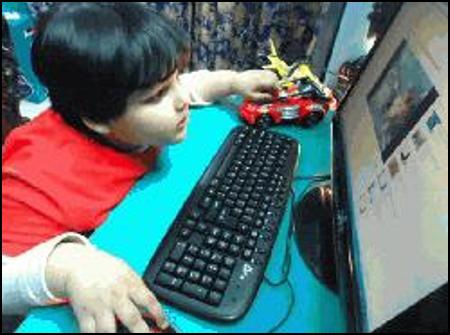
Wasik Farhan Roopkatha, a six-year-old Bangladeshi boy, has hogged the headlines of the international media as he created history by clinching the title of world's youngest computer programmer.


The story of Roopkatha, Bangla for 'fairytale', has overshadowed even (a) fairytale. The New York Herald Tribune, California Observer, Estate News, Children Post and many international websites have recognized him as the youngest computer programmer on earth.


The UK-based globally-acclaimed TV show, Ripley's Believe It or Not, informed his parents recently that the Ripley's would include Roopkatha in its new book, which would hit bookshops worldwide in September this year. His parents have already penned an agreement with Ripley's to this end.


At this tender age of six, when most of the children play games with toys, Roopkatha develops his own computer system (with windows) and runs tags and code of computer programming like an expert.


The born genius, a resident of Gulshan in the capital Dhaka, unbelievably started computing when he was hardly seven months old, and learned writing on computer at the age of only two, said his proud mother Cynthia Farheen Risha.


"Every day, the wonder boy spends more than 12 hours on computer and knows how to change the games' characters by using emulator. He has also an excellent command over computer programming language (C & C++)," she said.


At the beginning, his parents tried to refrain him from playing on computer as they though that spending much time on computer may damage his eyes.


"But our efforts went futile as the boy made a hullabaloo and stopped taking food protesting our move. At last, we were compelled to allow him to play on computer, and now he spends 12-13 hours on computer every day," Risha said.


She said her son's curiosity about computer had started a couple of days after his birth. He would look at computer monitor with eyes unblinking and refrained from eating until the computer was switched on.


She said Roopkatha never took IT lessons and learned everything without taking anybody's help.


Risha said he has already played more than 700 games and completed many complicated games like Sonic-knuckles(all sonic series), Prince of Persia, Terminator 3, Hercules, Air Conflicts, Age of Mythology, lock on, azangara, Metal Gear Solid, Mig-29 fulcrum, Mario Forever(all Mario series), Super Mario64 Nintendo 64, Need for Speed series, The bugs life, legend of Zelda, Star Defender, Red dead redemption, lock on flaming cliffs, Victoria: An Empire Under the Sun, Flight simulator lll, Eve online, Modern Warfare 2, FPS mechanics, Age of Empires 3, Rise of Legends, Castle vania - legacy of darkness act.


The computer prodigy can develop software using various emulator such as project64 1.7, dolphin, Game Cube, Nintendo 64, Gameboy Advance, Virtual Boy, DeSmuME and Computer Emulators. PC- Engine Emulators, Wonderswan Emulators, Atari 2600 Emulators, Atari Jaguar Emulators, MSX Emulators, Microsoft XBox, Microsoft XBox 360 act.


He knows operating system setup and troubleshooting. And more than 5000 English words are in his store and with the words, he can make sentences.


Typing is a very simple matter to him as the boy can type words with his tiny fingers as swift as any highly efficient typist without having a look at the keyboard.


The computer wizard can perfectly manage games project tools and
synchronize any project with other projects. He can also use different complex codes and run them easily.


Roopkatha can browse internet and send emails without any help. He can also enter any website and search any information through search engines. He has also good knowledge about hardware side by side with an excellent command over MS Word, Windows XP, Power Point, Angle and Photo Shop.


Creating file through MS Word, text design, picture ad, graph and table work, accounting through excel, picture moving operation through power point, slide show and sound and music ad work are matters of minutes to him.


Roopkatha can edit any picture in photo shop easily and insert the character of one game into another by changing information. He can install gaming software on computer after downloading from internet. Besides, he also can install various software and games in the PC from compact disc (CD).


Bangladesh Association of Software and Information Service (BASIS) accorded a reception to Roopkatha recently as a youngest computer programmer.


"I must say from the technological point of view that Roopkatha is definitely a wonder baby. I am amazed knowing the time and energy he dedicates to this complex programming, " said Aksadur Rahman, programmer and project manager of MediaSoft.


Roopkatha's businessman father Wasim Farhan and mother Risha hope that their son would become a great programmer in future and introduce a new episode in the cyber world.

Thursday, March 29, 2012

Bangladesh has no final say

It appears the UPA government has finally succeeded in convincing Bangladesh on the multi-purpose Tipaimukh dam. Despite protests from the opposition and environmental activists, Bangladesh has recently expressed its intention to support the proposed Tipaimukh Dam through its High Commissioner in New Delhi Tariq Ahmad Karim. It is the result of the recent visit of Gowher Rizvi, Foreign Affairs Advisor to the Bangladesh Prime Minister Shiekh Hasina to New Delhi. Gowher Rizvi alongwith his colleague Dr. Mashiur Rahman and Bangladesh High Commissioner Karim had met with a number of Indian leaders including the Prime Minister Manmohan Singh and ministers for home, finance, power, rural development, and water resources and the national security advisor. With the assurances given by India, the Awami League government in Bangladesh seem convinced that there will be no diminution in the flow of waters in Surma and Kushiyara rivers and that the high dam would have no adverse environmental or ecological impact, no aggravation of the floods during the monsoon. Yet, the government of Bangladesh is proposing to send an expert team to the Dam area to examine the features and likely impact of the dam on the flow of water into the Surma and the Kushiara. Here, we need to remember that, extending support to the Tipaimukh dam is not the unanimous opinion of Bangladesh. Bangladeshi experts have said the massive dam will disrupt the seasonal rhythm of the river and have an adverse effect on downstream agriculture and fisheries. Also, the Khaleda Zia led opposition BNP is dead against it. The Awami League government has dismissed the opposition to the dam as mere demagogy, stridency, devoid of substance and playing to the gallery. It also said, partisan politics and propaganda has replaced the pursuit of truth amongst many commentators. An interesting point to be noted here is that the Indian Prime Minister had invited Bangladesh to become an equity partner in the Tipaimukh project and take a share of the power that will be generated. Bangladesh believes this would guarantee them a place at the decision-making table and the ability to oversight the project at all stages. Here lies the cream icing.


Tipaimukh Dam is a proposed embankment dam on the river Barak in Manipur. The stated purpose of the dam is flood control and hydroelectric power generation. The project has led to controversy between India and Bangladesh over water rights as well as controversy with Manipuri people to be relocated by the reservoir. The dam will be 390m long and 162.8m high, across the Barak River. The dam`s crest elevation will be at an altitude of about 180 m. above mean sea level with a maximum reservoir level of 178 m. The dam was originally designed to contain flood waters in the lower Barak valley but hydro power generation was later incorporated into the project. The project will have an installation capacity of 1500 MW, supplied by six 250 MW Francis turbine-generators. Here we have to be very clear in our mind, that the support of Bangladesh in the matter of the proposed Tipaimukh Dam does not necessarily mean that all the roadblocks have been cleared. They must remember that, it is not only activists but the general public of Manipur is against the dam also. Besides being an earthquake zone, the water reservoir for the proposed dam would lead to massive loss of precious flora and fauna. It will also uproot many villages who they say would be relocated in various locations. But this is entirely against human logic. We have to take into account the man-land relationship and the attachment that people have with the land on which they were born. One cannot simply relocate living people. Yes, Manipur needs power. But it should not be at the cost of precious flora and fauna and of the man-land relationship.


‘Under an elected parliamentary dictatorship with an irresponsible opposition’

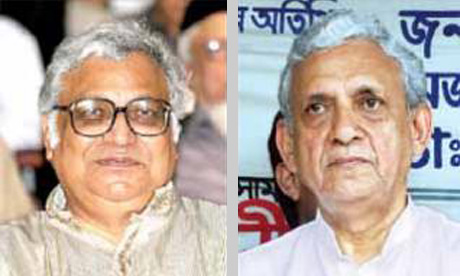
Bangladesh is ‘now under an elected parliamentary dictatorship’ with an ‘irresponsible opposition’, says left-leaning writer and activist Syed Abul Maksud.

The Awami League and the Bangladesh Nationalist Party act in one way when they are in power and in altogether a different way when in opposition, he said in an exclusive interview with New Age on Tuesday.

Society is now in the grips of a sense of fear, which the incumbents have given rise to, Maksud said.

‘The extent of the space for dissent, freedom of expression and freedom of press ultimately marks the difference between a democratic government and a despotic regime — military or otherwise,’ he said.

In the past four decades since independence, successive governments have developed an ‘economy of thugs’, Maksud observed.

Excerpts:

The government has honoured the country’s foreign friends for their contribution to the war of independence in 1971. What is your view about the initiative?

I appreciate the move to honour the foreign friends who provided immense moral and material support in our struggle for independence. It was a moral duty of the government to formally recognise their contribution.

It is not that the government has taken the move all on a sudden. Many people, in fact, demanded recognition for the country’s foreign friends. I myself have written on the issue. I am happy that the process has begun, belatedly though, and hope that it will continue.

The Awami League is, however, reluctant recognise the contributions of the members of the Bangladesh Nationalist Party to the war of independence, and vice versa. In fact, each more often than not questions of the role of the leaders of the other. Why is it so?

It is a reflection of their parochial political mindset. In a liberal democracy, you can differentiate political parties on the basis of their activities and ideologies. You can differentiate a socialist party from a conservative or a democratic party abroad.

Here in Bangladesh, however, you cannot differentiate the two major political parties on the basis of their policies and programmes and what their leaders say. They pursue identical political policies. They have made Bangladesh politics hostage to two families — the Sheikh family and the Zia family.

You have talked about liberation war honour. It could have been better if the foreign friends were honoured from a united platform.
The government ‘did not involve’ the opposition parties in the process. It is an unfortunate political reality.

Political empowerment of the people was one of the motivations of the war of independence. Have we achieved it in the past four decades?

We have achieved some kind of political independence and a flag. But we are yet to achieve political independence in the true sense of the term. Instead, we have become politically dependent on India. Yes, India provided us with moral and material support in 1971. But the Indian ruling class has also obstructed our efforts to be politically independent through their dominating attitude.

Sheikh Mujibur Rahman, who was a towering personality, somehow managed to overcome the dominance of India. After his assassination, most of the military rulers and the political governments have largely pursued anti-Indian stance. As such, the relations between the two countries have remained strained and distrustful for several decades. The Awami League, which is exceptionally friendly towards India, has also failed to improve the strained relationship.

The January 11, 2007 intervention in the political process put our political freedom at stake. In the subsequent two years, former army chief General Moeen U Ahmed tried to make sure that we remained politically dependent on India. The regime made dependent — politically, economically, socially and culturally — on India.

We watch Indian television channels in Bangladesh but India does not allow Bangladeshi television channels to broadcast their programmes there. It is suffocating and people cannot raise their voice against such duplicity.

Why have India not given Bangladesh even its due share on different issues during the AL-led government if the Awami League, as you say, is ‘exceptionally friendly towards India’?

The government goes out of the way to accommodate the agenda of India but such a ‘friendly’ gesture is not reciprocated. Most people now understand that India never goes against its interests — genuine or otherwise.

What would be the political cost of maintaining such ‘exceptionally friendly relations’ with India?

Why has the Indian ruling class become adamant about not signing the Teesta agreement and so indifferent to continued border killings? The answer is that the Bangladesh government has lost its capacity to bargain with India. They compromise national interest to maintain personal and party friendship.

Not only the Awami League but its political allies also are in the race to be exceptionally friendly towards India. They would have to pay for it in the next general elections, certainly.

Some Awami League leaders have, however, remained true nationalists but their top leadership is pro-Indian. The pro-Awami League intelligentsia, cultural activists, writers and journalists have also become pro-Indian.

An interesting phenomenon is that the persons who used to be ‘pro-Pindi before and during the liberation war have become pro-Indian all on a sudden. They are sheer opportunists. This section of the people have lost nationalist zeal over the past four decades and given rise to a national crisis.

Ministers often allege that the advisers to the prime minister take many decisions for their ministries. In such circumstances, what is your opinion about the government’s decision making process?

In British and Indian democracy the cabinet is responsible to parliament. But, in our parliamentary form of government, parliament has hardly anything to say as the constitution has given unlimited power to the prime minister. The ministers are expected to perform according to the wishes of the prime minister.

The prime minister has also set a new layer — six unelected advisers —between her and her cabinet members. The government cannot make any decision, policy and law without the consent of the advisers. We are now under an elected parliamentary dictatorship.

People’s perception is that corruption is rampant in almost all public offices. What is the reason for such a perception?

Systemic corruption is there in different offices where a few honest people cannot stop the menace. There is hardly any accountability in the government machinery as there is no parliamentary oversight.

Parliament is not holding any meaningful debate. The ruling party MPs are busy flattering the government in general and the prime minister in particular. The associate organisations for youths, students and workers of the ruling party have emerged as a new threat. They, together with a small number of government officials, have taken corruption to a new height.

Shouldn’t the opposition play a role to make the government accountable to parliament?

Yes, indeed. But the opposition, in our system, has become irresponsible opposition, no matter which party they belong to. They prefer to remain outside parliament but draw monetary and other facilities related to their positions.

Had they been in parliament throughout its tenure, they could at least have raised their voice against the decisions and laws made by the government. They could have stopped things going unchallenged.

All these things happen because there is hardly any difference between the two major political parties — the Awami League and the Bangladesh Nationalist Party — in terms of principles, goals and policies.

I believe the opposition should go to the House and play a critical role remaining above narrow partisan and personal gains.

The main opposition BNP has alleged that the government created obstruction to its March 12 rally, imposed restriction on the movement of the leader of the opposition Khaleda Zia when she came out of her house for visiting the National Martyrs’ Memorial at Savar on March 26 morning, and the Ruposhi Bangla Hotel authorities cancelled, upon instructions by an intelligence agency, the booking for a programme where she was scheduled to be chief guest. What is your view about these incidents?

These were highly undemocratic behaviour by an elected government. It is unfortunate. It will ultimately make the government loser. The leader of the opposition in a parliamentary democracy is part of the government. Creating obstructions to her programmes and movements are violation of constitutional rights.

Economic emancipation was a motivation for the war of independence. At what phase of economic emancipation are we, as a nation, now?

Before replying to this question, I need to mention that none of the governments, including the Awami League, has upheld state principles mentioned in the 1972 constitution in the past four decades.

The Awami League has emerged as a bourgeois nationalist and capitalist political party after the war. It has kept socialism merely as a word in the constitution. Sheikh Mujib nationalised all industries and developed state capitalism. State capitalism and corruption are synonymous in countries like Bangladesh. Corruption has become institutionalised over the years.

Amid the surge of consumerism, the entire nation has lost its nationalistic principle. We have in fact submitted ourselves to consumerism.

Democracy was, and is, not practised in its minimal form in and outside the parties.

The rural people have, however, come out of severe poverty thanks to non-government organisations which were supported by the capitalist world.

Why has the level of income inequality remained unchanged?

At least 30 per cent of the people were
bare-bodied in the rural markets in 1972 and 1973. At least 60 per cent of them were bare-footed.

Yes, we have come out of a certain level of poverty. But 15 per cent of the people remain deprived of one out of three meals a day when MPs use Tk 3 crore cars. It is because successive governments have developed an ‘economy of thugs’ in the last 41 years.

My point is that these governments’ contribution to reduction of poverty is negligible. People have established small businesses and applied technology in agriculture and changed their fate themselves.

Despite their absolute majority in parliament, the Awami League government did not fully restore the secular principle of the state. Why?

The Awami League, by nature, is a secular political party. It, however, did not fully restore the secular principle of the state keeping its vote banks in considerations.

What is the state of freedom of the press amidst intimidation and obstruction of journalists by ruling party men and powerful quarters often?

Both the freedom of expression and freedom of press are now vulnerable. The press is now under close watch. The electronic media could not telecast live the March 12 rally of the opposition due to undue obstructions. It is uncalled for.

What is your position about the non-party caretaker government?

We could hold election under a party government if we were in a good democratic environment. But, unfortunately, the situation is different here.

The level of distrust between the two major political parties is very high. The government often obstructs the programmes and movement of the opposition.

The people in general and the opposition parties in particular are losing confidence in the government, which appears to be despotic in nature.

In this situation, a non-party interim government is a good option.

What is the state of society?

We are in transition. Consumerism is becoming prominent across society. The country has been made a springboard for international conspiracy. The government controlled by General Moeen U Ahmed has almost decimated the nation’s self-confidence.

We lack the sense of social justice. A sense of helplessness is grabbing the people. The number of dissenting voices is gradually decreasing. It is frustrating.

Only a strong and genuine nationalistic leadership can help people to come out of this situation.

You say the number of dissenting voices is decreasing. Why?

It is because the governments have been getting oppressive and repressive in nature.

The two political parties, which fought for democracy together against an autocratic government, now behave like autocrats. They act in one way when in power and in altogether a different when in opposition.

A sense of fear prevails and the government itself is creating fear across society. It is not democracy.

The extent of the space for dissent, freedom of expression and freedom of press ultimately marks the difference between a democratic government and a despotic regime — military or otherwise.


Strategically Speaking : Shrinking political space for the opposition

It is not only shrinking, political space of the opposition is shrinking at a frighteningly increasing rate. And that is alarming for any country that claims to be democratic and civilised. To be civilised is the first essential criterion that makes for a democratic nation, and one that is not cannot claim to be fully democratic. Looking at the way the government has gone about curtailing the political freedom of the opposition by denying them the room to conduct legitimate and lawful political and civil activities, and which were neither potentially disruptive nor posed danger to public life and property or to national security, one wonders whether we can claim to be either democratic or civilised. 

On the heels of the government action in respect of the March 12 BNP rally, which went ahead despite everything that was done by deploying the entire state machinery including the AL party appendages to see that the programme did not come through, the two recent incidents concerning the BNP leader make one wonder whether by acting in this manner the government is not shooting itself in the foot. 

What can one make of the repoprt that the leader of the opposition was hindered from going to the National Memorial by the law enforcing agencies? As reported in the media, she was stopped right at her doorsteps till she and her entourage literally forced themselves through the barricade and moved towards Savar. And obstructions were set up in quite a few places along the road also, reportedly by AL cadres.

The predictable denial was not long in coming. We are by now used to the overused remarks of the home minister in such instances. In reply to question from journalists whether such action was ordered from the top, she said that the government had not passed any such order to any agency to bar the movements of Begum Zia on the morning of March 26. Really? Then what we saw and read in the media, of policemen in uniform creating obstruction for the opposition leader's entourage, must either have been stage managed by the BNP to malign the government or these were some cosmic apparitions doing the dirty job for somebody. 

That these people were neither apparitions nor cosmic interventions was clear from the way they behaved with the people around them. Pictures don't lie and unoriginal explanations do not wash with the public. But the explanation given by another person holding responsible position in the government sounded so comically ridiculous as to compel one to wonder whether we are destined to suffer at the hands of little men with little minds who take the people for granted and give no credit to their intelligence. He said, without directly answering the question, that nobody would be allowed to create law and order problems in the name of exercising political or civic rights. Are we to believe that the intention of the leader of the opposition on the morning of our National Day was to create law and order situation for the government? 

It is for the government to enquire as to who ordered, and on what grounds, the obstruction of the opposition leader on her way to the National Memorial, because if we take the claims of the government to be true then there is reason to be worried because it seems that there is somebody who is acting over the head of the legitimate authorities. And if the police were there without specific instructions from the lawful authorities we are surprised that the relevant persons have not been asked to account for their actions.

As for the other incident, the proposed launching of some books on the late BNP leader, it could not be held because the reservation of the programme venue, which happened to be a hotel owned by the government, was cancelled at the very last minute. 

Here again it seems that some non-corporeal entity must have been at work, because nobody has taken the responsibility of having passed the order to cancel the booking. In fact the government has denied having instructed anybody to that effect. But as reported in the media, the cancellation was done on the orders of the "higher authority." We are confused once again, and, even more, disappointed that no one has the gumption to own up the responsibility for passing the order to cancel the reservation. And if it was not a part of an underhand wily scheme of some half-witted mind in the administration, then the government should come up with a plausible explanation as to why the hotel management acted in the way they did.

These actions of the government, and we find very hard to accept what the government has said with regard to these two incidents, puts the political wisdom of the AL in very poor light. Such is not expected of a party with a long political tradition. One wonders whether it is an indication of the party's political bankruptcy or is it that the AL has run out of options to counter the opposition. 

Curtailing the opposition's political freedom demeans the significance of the month of March.