Pages

Tuesday, January 31, 2012

Romney looks for win in Florida

Floridians are set to vote in the state's Republican primary as rivals Mitt Romney and Newt Gingrich look to capitalise on earlier wins.

Romney has surged ahead in the Florida polls, ahead of Gingrich by 15% in the most recent survey.

The other hopefuls, Ron Paul and Rick Santorum, have abandoned campaigning in Florida, making it in effect a race between two candidates.

Latinos and retired voters make up key voting blocs in the state.

Both Romney and Gingrich are looking for increased momentum after early primaries split wins among three different candidates.

Polling stations will be open from 0700 to 1900 (1200-0000 GMT). Early voting has been allowed for the past 10 days, and it is estimated that 600,000 people have already voted.

Republicans are vying to oust Barack Obama from the White House in November.

Primaries and caucuses will be held in every US state to pick a Republican candidate until the eventual winner is crowned at the party's convention in August.


Gingrich scored a resounding victory in South Carolina's primary earlier this month, but his momentum has since been stymied in the face of a Romney fightback.

Both candidates crisscrossed Florida on Monday in a final hunt for votes.

"My goal would be by the end of that first day, about the time that President Obama arrives back in Chicago, that we will have dismantled about 40% of his government," Gingrich told voters in Jacksonville, Florida as part of his stump speech.

Romney finished his day of campaigning at The Villages, a retirement community that has become a popular political stop.

The former Massachusetts governor had attacked Gingrich throughout last week but spent most of the rally focusing on Obama.

Reagan's son campaigns

Several surveys released on Sunday gave Romney a lead of between five and 16 points.

But Gingrich vowed to continue his campaign in the Sunshine State and beyond, attacking Romney's conservative credentials.

"On big philosophical issues, he is for all practical purposes a liberal and I am a conservative and that's what this fight is going to be about all the way to the convention," he told CBS News on Monday.

At least 1,114 delegates are needed to win the Republican nomination at the August convention. In Florida, there are 50 delegates are at stake.

"This race is just getting started," Martin Baker, Gingrich's national political director, told reporters, saying there was "a long way to go" before the nomination was decided.

The former House speaker also campaigned with former President Ronald Reagan's son Michael on Monday, hoping to strengthen his campaign's ties to the revered Republican leader's legacy.

States in which the electorate is relatively evenly split between Republicans and Democrats, making them targets for aggressive campaigning by both sides. In recent elections, the most important swing states were Florida, Ohio and Pennsylvania. Those have a high number of electoral votes, making them prime battlegrounds during the election. The list of swing states changes with their demographics. In the 2008 election, for instance, historically Republican Virginia and North Carolina voted for Barack Obama, anticipating their status as hard-fought swing states in 2012. Others that were close in previous elections, like Iowa and New Mexico, appear to be solidly Democratic. 

Former Pennsylvania Senator Rick Santorum left Florida over the weekend to be at the hospital bedside of his three-year-old daughter, who has a rare genetic condition.

Rather than return to Florida, he will campaign in Colorado, Minnesota, Missouri and Nevada over the next two days.

Libertarian Texas congressman Ron Paul, meanwhile, is already focusing on Nevada.

Gingrich picked up the endorsement on Saturday night of former rival Herman Cain, who dropped out of the Republican race in December.

The former House speaker is portraying himself as the only viable conservative in the race.

Romney has struggled to dispel misgivings among some Republicans about his political record as governor of the liberal state of Massachusetts and his Mormon faith.

In the past, Romney has adopted a pro-choice stance on abortion, switched positions on gay rights and pushed through a healthcare reform in Massachusetts that was the template for President Obama's overhaul of the system nationally.

The next contest after Florida will be Nevada on Saturday.

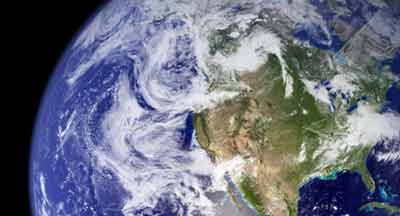
Is the Earth getting lighter?

The recent crash landing of Russian spacecraft Phobos-Grunt has focused attention on the increasing amount of space junk orbiting the planet. So does this mean the Earth has been getting lighter? The BBC's Radio 4 programme More or Less turned to a group of Cambridge University academics for the answer.

There are factors that are causing Earth to both gain and lose mass over time, according to Dr Chris Smith, a medical microbiologist and broadcaster who tries to improve the public understanding of science.

Using some back-of-the-envelope-style calculations, Dr Smith, with help from physicist and Cambridge University colleague Dave Ansell, drew up a balance sheet of what's coming in, and what's going out. All figures are estimated.

By far the biggest contributor to the world's mass is the 40,000 tonnes of dust that is falling from space to Earth, says Dr Smith.

"[The dust] is basically the vestiges of the solar system that spawned us, either asteroids that broke up or things that never formed into a planet, and it's drifting around.

"The Earth is acting like a giant vacuum cleaner powered by gravity in space, pulling in particles of dust," says Dr Smith.

Another much less significant reason the planet is gaining mass is because of global warming.

"Nasa has calculated that the Earth is gaining about 160 tonnes a year because the temperature of the Earth is going up. If we are adding energy to the system, the mass must go up," says Dr Smith, referring to Einstein's equation that energy equals mass times the speed of light.

This means that in total between 40,000 and 41,000 tonnes is being added to the mass of the planet each year.

But overall, Dr Smith has calculated that the Earth - including the sea and the atmosphere - is losing mass. He points to a handful of reasons.

For instance, the Earth's core is like a giant nuclear reactor that is gradually losing energy over time, and that loss in energy translates into a loss of mass.

But this is a tiny amount - he estimates no more than 16 tonnes a year.

And what about launching rockets and satellites into space, like Phobos-Grunt? Dr Smith discounts this as most of it will fall back down to Earth again.

But there is something else that is making the planet lose mass. Gases such as hydrogen are so light, they are escaping from the atmosphere.

"Physicists have shown that the Earth is losing about three kilograms of hydrogen gas every second. It's about 95,000 tonnes of hydrogen that the planet is losing every year.

"The other very light gas this is happening to is helium and there is much less of that around, so it's about 1,600 tonnes a year of helium that we lose."

So taking into account the gains and the losses, Dr Smith reckons the Earth is getting about 50,000 tonnes lighter a year, which is just less than half the weight of the Costa Concordia, the Italian cruise liner, that ran aground recently.

Charges against Kamaruzzaman accepted

The International Crimes Tribunal accepted the crimes against humanity charges against Jamaat Leader Mohammad Kamaruzzaman on Tuesday.

The three-judge tribunal headed by its Chairman Justice Nizamul Huq also fixed February 29 for hearing on the charge framing against Kamaruzzaman, who is charged with nine counts of crimes against humanity committed during the 1971 Liberation War.

The tribunal asked the prosecution to submit copies of the formal charges against Kamaruzzaman and other relevant documents to the tribunal’s registrar by February 6.

The defence should collect the copies from the registrar office on February 7, the tribunal said.

The prosecution on January 15 submitted the charges against the Jamaat assistant secretary general before the tribunal, which later fixed January 31 (today) to pass an order whether it will take the charges against Kamaruzzaman into cognisance. 

Earlier on December 28 last year, the tribunal sent the formal charges against Kamaruzzaman back to the prosecution as the charges were not classified and organised properly.

Bangladeshi to lead UN peacebuilding commission

Bangladesh’s permanent representative to the United Nations, Dr AK Abdul Momen, will lead the UN Peacebuilding Commission for the next one year.

The prestigious election, which is first for the country, came on Monday.

Upon his election, the new chairman pledged that he would pursue “the path of inclusion” throughout 2012 to enhance the six-year-old body’s ability to mobilise resources and align key actors in assisting the populations of countries emerging from conflict.

“The commission is heading forward, but we have yet to reach our destination,” a press statement posted on the website of the UN Peacebuilding Commission quotes Momen as saying. 

He acknowledged that while the multi-stakeholder body had charted solid successes since its establishment in 2005, countless post-conflict societies were still bogged down by social, economic and governance challenges. 

Indeed, since no fragile or conflict-affected country had achieved a single Millennium Development Goal, it was clear that much remained to be done, he added.

While aware that such situations could not be reversed overnight, Momen said under his chairmanship, the commission would work to bolster its “field-centric” approach to mobilising resources, while encouraging flexible and adaptable instruments of post-conflict engagement. 

Grounded in national ownership, local capacity-building and the gender dimension, the commission would target employment generation, infrastructure development and the management of natural resources – sectors considered key to speeding the delivery of peace dividends.

Momen said he would also work throughout the year to bring global and regional stakeholders together for a more coherent approach to achieving the objective of sustainable peacebuilding. 

He would “narrow gaps” and promote better coordinated responses with the aim of improving the way in which the commission did business so that it could take the global peacebuilding agenda forward.

Momen’s address set the stage for the opening of the commission’s sixth session, during which its Organizational Committee also elected Ranko Vilović ( Croatia) as Vice-Chair. Looking ahead to 2013, the commission also decided that its next chairperson would be elected from among the Group of Eastern European States. 

The remaining vice-chair, as well as the heads of the commission’s country-specific configurations, would be elected at a later date.

Adopting its 2011 report, the commission also approved a “road map of actions for 2012”, proposed by its previous chairman.

Siddika Kabir passes away

Siddika Kabir, a noted nutrition expert and culinary artist, died at a city hospital on Tuesday, Independent TV reports.

A famous TV face who used to run the show ‘Siddika Kabir’s Recipe’, Prof Kabir was 80. 

She also worked as the consultant of consumer brands Dano, Nestlé and Radhuni.

In 1966, Siddika started attending different cookery shows on television. She authored a number of recipe books to her credit and was recognised with different awards.

Obtaining a higher degree in food nutrition and institutional administration from the United States, she joined the nutrition department of Home Economics College.

Born in 1931, Prof Kabir had a bright academic life. She started her career in teaching profession by joining mathematics department of Eden Girls’ College in 1957.